Wines and wine products in the EU: Compliance with Ingredient Disclosure and Nutritional Labelling Requirements
The European regulatory landscape for food labelling has undergone a significant transformation. Regulation (EU) No 1169/2011, known as the Food Information to Consumers (FIC) Regulation, established that all food products must include a nutrition declaration and a list of ingredients. However, until recently, alcoholic beverages with an alcohol content exceeding 1.2% by volumewere exempt from these mandatory requirements.
The Turning Point of Regulation (EU) 2021/2117
Regulation (EU) 2021/2117 of December 2, 2021 amended the rules governing the wine sector and has applied since 8 December 2023. This new legislation has fundamentally transformed wine labelling requirements in the European Union.
List of Ingredients
A complete list of ingredients and oenological compounds used in the winemaking process, in accordance with the European Oenological Code.
Mandatory Nutrition Declaration
The regulation requires a mandatory nutrition declaration, with at least the energy value displayed on the physical label.
QR Code
Additional nutritional details, such as carbohydrates, sugars, fats, proteins, and salt, may be provided digitally via a QR code.
Allergen Labelling
Allergens must always remain clearly visible on the physical label. They cannot be provided exclusively through electronic means.
It supplements Regulation (EU) No 1169/2011 specifically for the wine sector, without replacing it, and lays down detailed criteria for the implementation of the new rules introduced by Regulation (EU) 2021/2117.
establishes which ingredients must be declared
Regulates the use of electronic labelling (QR codes)
Sets accessibility and transparency requirements
Requires certain information, such as allergens, to remain on the physical label
Spirits and Distilled Beverages: Regulatory Framework
Regulation (EU) 2019/787
The labelling of spirits is governed by Regulation (EU) 2019/787 on the definition, description, presentation and labelling of spirit drinks.
No Specific Obligations
Currently, there is no specific obligation to provide nutritional information or a list of ingredients for spirit drinks comparable to that introduced for wine by Regulation (EU) 2021/2117.
Voluntary Initiatives
Certain sectors have introduced voluntary transparency initiatives regarding nutritional information; however, these are not mandatory under EU law, unlike the requirements applicable to wine.
What happens in case of non-compliance?
In Italy, penalties are established under national food information law (Legislative Decree No. 231/2017) and are enforced by thecompetent authorities, including the ICQRF, which may impose sanctions and corrective measures.
Administrative Fines
Fines generally range from several thousand euros to over €20,000, depending on the severity of the infringement.
Market Suspension or Withdrawal
Non-compliant products may be suspended or withdrawn from the market.
Corrective Labelling Measures
The product must be corrected or re-labelled before it can be placed back on the market.
Additional Enforcement Measures
In more serious cases, competent authorities may impose further corrective or restrictive measures.
Scegli QR Code - E-Label Module di Trusty per l’etichettatura elettronica
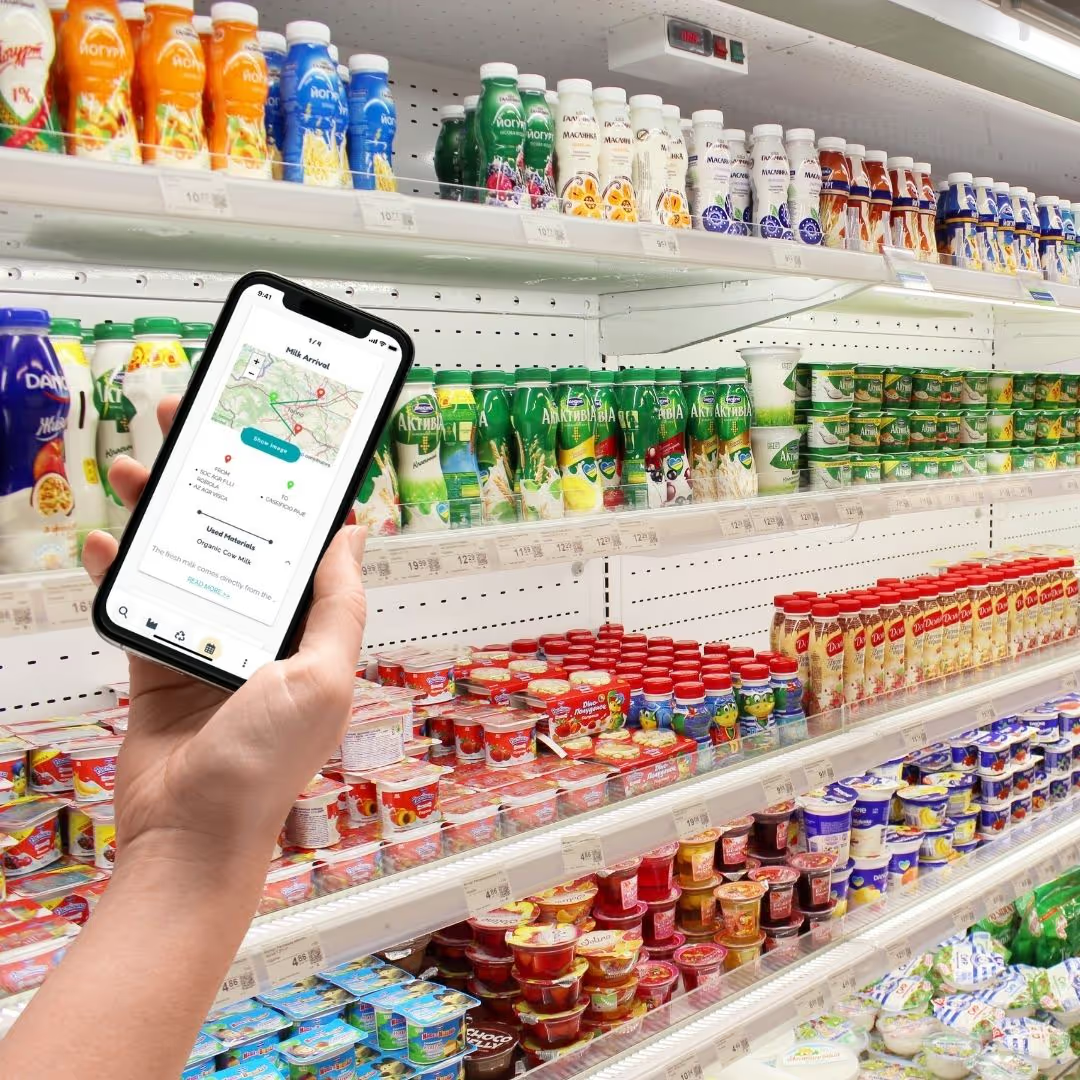
Questo modulo genera etichette elettroniche accessibili tramite QR code, conformi allo standard GS1 Digital Link, ottimizzando la condivisione delle informazioni tra acquirenti, commercianti, il settore HORECA, aziende e consumatori.
Centralized and MultilocationSchede Prodotto Centralizzate e Multilocalizzate
Compliance with electronic labeling regulationsConformità alle normative sull'etichettatura elettronica, riguardanti sia la dichiarazione dei valori nutrizionali e l'elenco degli ingredienti negli alimenti, compresi nei vini e alcolici, sia le informazioni relative allo smaltimento.

.avif)
.avif)
.avif)
.avif)
.avif)
.avif)
.avif)
.avif)
.avif)
.avif)
.avif)

