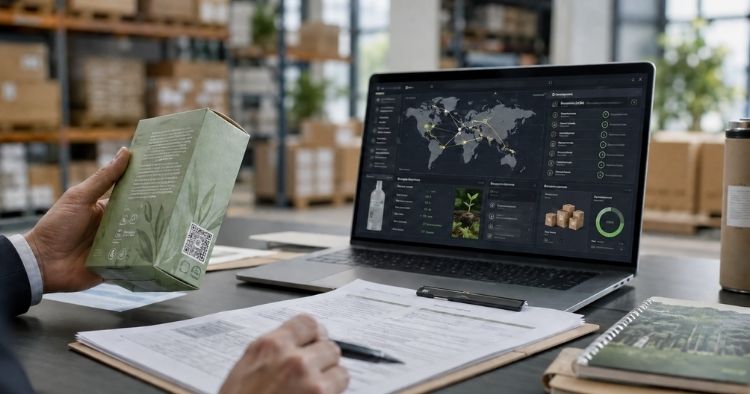
Agri-food supply chains are increasingly complex, involving extensive networks of actors and numerous intermediaries. This complexity makes it challenging to trace raw material origins, ensure regulatory compliance, and prevent fraud or opaque practices. According to the latest CNALCIS Report on anti-counterfeiting, the “Made in Italy” Law has already had significant impact: in the first nine months since its enactment, Italy recorded 2,357 cases of anti-counterfeiting measures applied. In the first half of 2024 alone, nearly 9,000 seizure operations were carried out, including around 300 interventions in the agri-food sector by MASAF-ICQRF.
Reconstructing a product's journey from farm to table is now a priority for governments, businesses, and consumers. This is driven by growing awareness of sustainability, food safety, environmental protection, and workers' rights. Italian and international policies alike are promoting greater transparency and sustainability across supply chains. Key initiatives include the United Nations Sustainable Development Goals (SDGs), the EU Farm to Fork Strategy, and the new European Deforestation Regulation (EUDR).
In Italy, Law No. 206 of December 27, 2023, known as the “Made in Italy” Law, is a major step forward for traceability and combating food fraud. It emphasizes technological innovation, with a strong focus on distributed ledger systems like blockchain, as a cornerstone of supply chain control strategies.
Blockchain: A Safeguard for Transparency and Security
Blockchain technology has become a highly effective tool for ensuring transparency, traceability, and trust. It allows consumers and industry stakeholders to verify the quality and origin of products with confidence.
Its strength lies in guaranteeing data integrity, making information virtually tamper-proof. Only authorized users can access or update data stored on the distributed blockchain platform. With these features, Distributed Ledger Technologies (DLT) provide a reliable and secure way to certify and store production data. Once recorded, the data is immutable, protected by advanced hash encryption.
Blockchain-Based Data Management Software: Benefits for Businesses
Blockchain-powered software for supply chain data collection and organization offers significant advantages for businesses. Here’s a closer look.
Regulatory Compliance:
Advanced technological solutions help businesses meet national and international regulations like the European Deforestation Regulation (EUDR), environmental labeling laws, and the U.S. Food Safety Modernization Act. These tools reduce the risk of penalties, build trust with regulators, and ensure transparency across the supply chain.
Ensuring Product Quality:
Integrated IT systems with advanced technologies help businesses guarantee product quality and meet global standards. In complex supply chains, these tools provide clear, detailed insights into every stage, from raw material collection to distribution, reducing fraud risks and protecting brand reputation.
Access to Large Retail Chains:
Blockchain applications for process monitoring give businesses a competitive edge in entering large retail chains or public tenders. Retailers demand high standards of safety, transparency, and quality, which these tools deliver by clearly demonstrating each supply chain stage from production to distribution.
Sustainability and Resource Management:
Advanced digital technologies allow businesses to transparently showcase sustainable practices, meeting consumer expectations for environmental responsibility and international regulatory standards.
Reputation and Market Advantage:
Using cutting-edge technology positions businesses as innovative and transparent, boosting their competitive edge and building consumer trust and loyalty.
Protecting Made in Italy
Blockchain-based digital systems are key to safeguarding and promoting Made in Italy products. They ensure precise traceability at every stage, from production to transportation to store shelves, documenting each step with transparency and security.
.png)
Blockchain also plays a vital role in combating Italian Sounding—the deceptive use of Italian-inspired names, images, or branding to sell non-Italian products.
Trusty and Blockchain Technology
Trusty provides an end-to-end platform leveraging blockchain technology for comprehensive supply chain management and traceability. With advanced tools like Track-and-Trace software and integrable modules, the platform optimizes interaction between all stakeholders, from producers to consumers.
.png)
These tools ensure accurate and secure recording of production and logistics stages, complying with international standards such as GS1 and EPCIS. They also facilitate data entry automation through APIs, blockchain-based authentication, and seamless information sharing. This approach not only enhances operational efficiency and reduces errors but also strengthens trust and collaboration across the entire supply chain.
By enabling businesses to share transparent and verifiable data with certification bodies and other stakeholders, the platform ensures reliability. Additionally, with a simple QR code scan, consumers can access detailed product information instantly.
Contact us to learn more about Trusty’s Traceability Solution.
Conclusions
Software for agri-food supply chain traceability is a game-changer, tackling the challenges of complexity and transparency in the sector. It ensures secure, reliable data while meeting the growing demands for sustainability and regulatory compliance from governments, businesses, and consumers.
Blockchain is poised to become the global standard for supply chain traceability, paving the way for a safer, more sustainable, and resilient food system. Trusty’s end-to-end platform is a strategic partner for businesses ready to embrace this innovation, offering integrated solutions to drive compliance, sustainability, and competitiveness.
Note. Some graphic elements and visual content on this page may include assets licensed from third-party platforms and/or content generated or reworked using artificial intelligence tools. These elements are used within the limits of the relevant licences and for illustrative purposes.