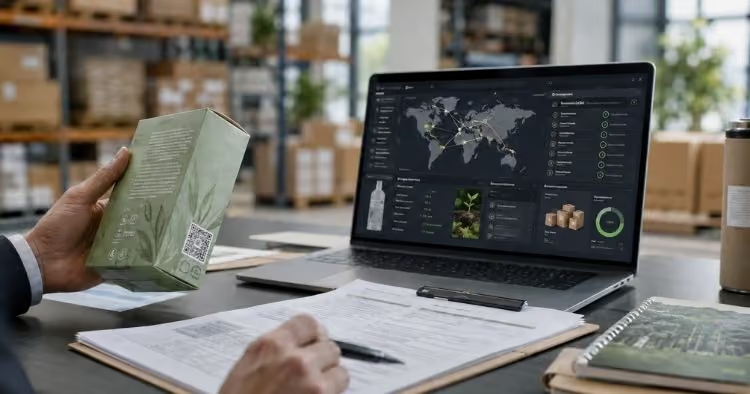
The EU Digital Product Passport (DPP) is a set of digital data linked to a product through a unique identifier and a data carrier, such as a QR code. It holds information on materials, composition, repairability, recyclability and the supply chain, and makes it available to customers, repairers, recyclers and authorities.
The DPP is introduced by the EU Ecodesign for Sustainable Products Regulation (ESPR) and will roll out one product category at a time, starting with steel, textiles, furniture and tyres. For companies, generating a QR code is the easy part. The real challenge is collecting reliable data from across the supply chain and keeping it up to date.
In this guide we cover the Digital Product Passport requirements, which products are affected, the most common misconceptions, and how to start preparing today.
What the ESPR requires
The DPP framework is set out in Regulation (EU) 2024/1781, the ESPR. The Regulation doesn’t create one passport for all products. It sets the general rules and leaves the details to delegated acts for each product category.
For each category, the delegated acts will define:
- what information the passport must contain
- which data carrier to use (QR code, RFID, NFC or other)
- whether the passport covers a model, a batch or an individual item
- who can access which data, and how long the passport must remain available
Two points are already clear. Passport data must be accurate, complete and up to date. And Article 9 explicitly lists improving product traceability along the value chain among the DPP’s purposes.
In practice: if a garment’s material composition is required, publishing it won’t be enough. You’ll need to prove that the data belongs to that specific model, batch or item.
Which products will need a Digital Product Passport, and when
There is no single DPP deadline for all products. In April 2025, the Commission adopted the ESPR Working Plan 2025–2030, which identifies the first product groups for which it will prepare delegated acts.I
Indicative timeline for the first delegated acts
The first act due is on iron and steel. The Commission opened the consultation in May 2026 and expects adoption in Q4 2026 (source).
The plan also includes several energy-related products, such as smartphones and tablets, as well as horizontal requirements on repairability and recycled content. After each delegated act is adopted, there is normally a transition period before the obligations apply.
Battery passport: a separate case
Batteries follow their own rules. The battery passport is set out directly in Regulation (EU) 2023/1542 and applies from 18 February 2027 to:
- electric vehicle batteries
- batteries for light means of transport
- industrial batteries with a capacity above 2 kWh
The message for companies is simple: the details will come with the delegated acts, but collecting reliable supply chain data takes months. Those who start organising it now will have a head start.
The Digital Product Passport is not a QR code
One of the most common misconceptions is that the DPP is a QR code. The QR code is only the data carrier: the gateway to the information, not the passport itself.
Article 10 of the ESPR requires the passport to be linked, through the data carrier, to a persistent unique product identifier. The data must be based on open standards, in interoperable, machine-readable formats. Article 11 also requires technical, semantic and organisational interoperability for data exchange across the whole supply chain.
In other words, the system must be able to say with certainty: “this information belongs to this product,” even when it comes from suppliers using different software. That’s why the hardest part isn’t printing the code, but building the data structure behind it.
GS1 standards, such as GS1 Digital Link for QR codes and EPCIS for supply chain events, are among the most widely used references today for identifying products, batches and items and exchanging data between systems.

Do you need blockchain for the Digital Product Passport?
No, the ESPR doesn’t require blockchain. But it can be a useful tool when several companies contribute data on the same product.
In a supply chain with many players, it’s important to know when data was recorded, where it came from and whether it has changed over time. Blockchain can’t make data that was wrong at the source correct, but it preserves its integrity, provenance and history. When passport data must be accurate and verifiable, it adds an extra layer of trust for customers, partners and authorities.
How to prepare for the Digital Product Passport in 5 steps
- Find out whether and when your products are in scope. Check whether they fall within the ESPR plan categories or under rules with their own passport, such as the Batteries Regulation.
- Map your supply chain and the data you have. Identify suppliers, processing stages and the information you already collect: composition, origin, certifications, environmental data.
- Define your identifiers. Decide how to identify models, batches or individual items, using recognised standards such as GS1.
- Involve your suppliers. Decide how to collect their data in a structured, verifiable way, without Excel files circulating by email.
- Choose an interoperable architecture. You need a platform that integrates with your systems (ERP, PLM) via APIs and can update data over time.
Towards the DPP with supply chain data management experts
The Digital Product Passport requires companies to collect data across the entire supply chain, link it to the right product and prove its reliability over time. That takes the right tools and the experience to use them. For years, Trusty has been supporting companies with supply chain traceability through the platform it developed, built on international standards such as GS1 and EPCIS, with blockchain securing data integrity and history.
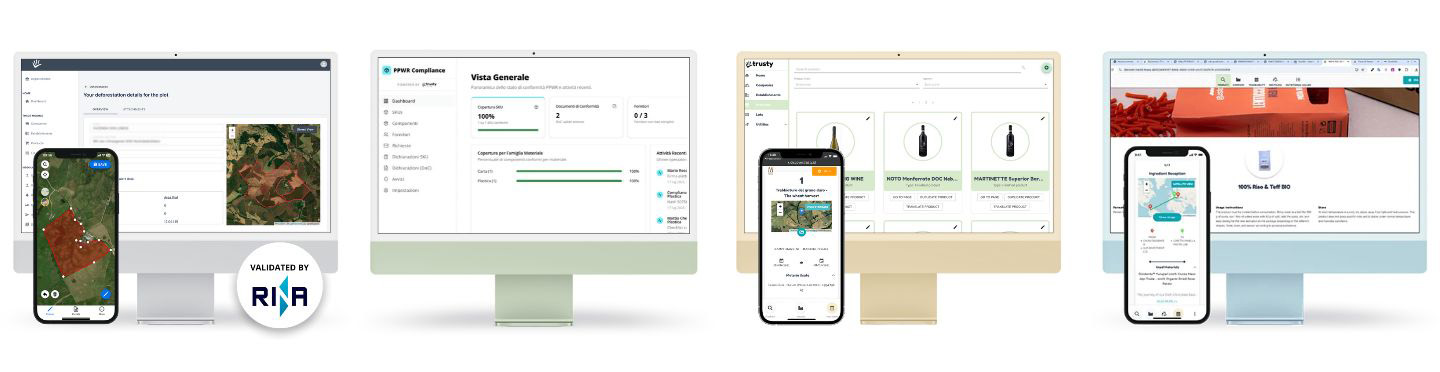
The same expertise underpins our compliance solutions for the EUDR, validated by RINA as a compliance support tool, and for the PPWR. Different regulations, one common challenge: collecting information from different suppliers, countries and systems and turning it into structured, verifiable, up-to-date data. It’s the same challenge the DPP will bring.
That’s why we can support you with the groundwork now. The ESPR requires every passport to be linked to a unique product identifier, with data in open, interoperable formats. On that basis, you can start understanding which supply chain data you already have and organise data collection from suppliers in a structured way.
The delegated acts will define what information goes into each passport, and in how much detail. In the meantime, having your data already in order can make it easier to comply once the requirements are set. If you already work with us, we can assess together what can be reused.
Digital Product Passport FAQ
Is the Digital Product Passport mandatory?
Yes, for product categories covered by an ESPR delegated act that requires it, and for batteries under their own regulation. There is no single date for all products.
Who has to create the DPP?
Usually the economic operator placing the product on the EU market, meaning the manufacturer or importer. But the data comes from the whole supply chain, suppliers included.
Does the DPP apply to the model, the batch or the individual product?
It depends on the category: the delegated act will decide, based on supply chain complexity and the product’s nature and impact.
Is the DPP a QR code?
No. The QR code is one of the possible data carriers for accessing the passport. The passport is the set of data linked to a unique product identifier.
Do you need blockchain?
The ESPR doesn’t require it. It can help guarantee data integrity and history when several companies contribute to the same information.
Can the same QR code be used for the PPWR and the DPP?
The PPWR provides for QR codes or other open, standardised digital data carriers on packaging. Designing a single data and identifier infrastructure from the start avoids multiplying codes and systems.
Thinking about how to prepare for the Digital Product Passport? Tell us about your supply chain and we’ll start from there. Contact us →
Note. Some graphic elements and visual content on this page may include assets licensed from third-party platforms and/or content generated or reworked using artificial intelligence tools. These elements are used within the limits of the relevant licences and for illustrative purposes.